New levelling agent concept for polyamide

Abstract
Dyeing PA fibres and their blends is a real challenge to textile manufacturers! In practical use it is known that for sophisticated PA dyeings the following becomes essential during the whole dyeing process: an accurate pH value and temperature control. For producing high-quality fabrics, levellers are required that have affinity to the dye or to the fibre, depending on their task.
Products with dye affinity are used as levelling agents and have a pseudo-cationic character; fatty amine ethoxylates are very frequently used. They form a dye-auxiliary complex, dissociating bit by bit in the dye bath with increasing temperature, facilitating the exhaustion of the dyes onto the PA fibre.
Auxiliaries with fibre affinity are often based on sulphonic acids and thus are anionic. They are normally applied for preventing streakiness on PA fabrics, since they exhaust on to the fabric instead of the dyes in the dye bath. For achieving good dyeing results on streaky-dyeing fabrics, even with a critical dye trichromate, the right auxiliary combination has to be found. In this article such an auxiliary system is presented, with SARABID IPD and IPF, which also facilitates the even dyeing of very critical dyeings without any problems.
Introduction
Today’s market puts high demands on modern textiles made of polyamide. The new CHT levelling-agent concept can fulfil these demands. Our innovative product system, consisting of SARABID IPD and SARABID IPF, accurately regulates the dyestuff exhaustion and helps guarantee level dyeing results, even on barré dyed polyamide articles.
Module Component 1: SARABID IPD
Influence on the levelling capacity
SARABID IPD has affinity for the dye and forms a dye-auxiliary-complex with the anionic dyes, which dissociates bit by bit in the dye bath with increasing temperature, enabling the dyes to exhaust evenly on to the PA fibre. SARABID IPD promotes the exhaustion behaviour of the individual dye components throughout the complete temperature profile and provides optimum bath exhaustion. For demonstrating the efficiency of SARABID IPD, some test methods are described in the following chapters. The levelling capacity of a levelling agent is illustrated by means of a step test, verifying both the levelling effect (mobility of dyes on the fibre) and the synchronisation effect (adjustment of dye exhaustion speed).
Test Description
In a step test, individual dyeings are removed at different temperature intervals during the dyeing process and replaced by an undyed sample. For the test series, polyamide material of the kinetic fibre type 3-4 was used, ie. a PA fibre type with normal exhaustion (kinetic fibre type 1-5 is determined with a simple dyeing test, which may be requested separately).
Acid dyes from the BEMACID N range were selected as test dyes. BEMACID N dyes are acid dyes of medium size with one sulpho group. The migration capacity of this dye class is moderate but can be clearly improved by adding a leveller with dye affinity. This is shown in the comparative dyeing.
The test was carried out on the laboratory dyeing machine Mathis- Labomat:
100 % PA 6.6 knitwear, ready for dyeing
LR 1:10
Initial dyeing temperature: 30°C
Heating rate: 1°C/min
pH 5.5 with NEUTRACID BO 45 (buffer system)
0.25% BEMACID Yellow N-TF
0.50% BEMACID Red N-TF
0.75% BEMACID Blue N-TF
The result of the step test (Figure 1)

 shows both an even as well as a synchronous dyestuff exhaustion with SARABID IPD: In combination dyeings, SARABID IPD aligns the exhaustion behaviour of individual dye components, since it controls the exhaustion speed of the dyes in the heating phase and promotes an even dye distribution at boiling temperature in the migration phase. The same applies for 1:2 metalcomplex dyes. Besides the levelling capacity, the migration capacity of a levelling agent is also of major importance in PA dyeing.
Influence on the migration capacity
SARABID IPD increases the migration capacity of the dyes by reducing the dye affinity to the fibre. This is tested by a migration test.
Test Description
In a first step a dyeing, using a poorly migrating acid dye, is produced in the exhaust process on a 100 % PA 6.6 ready for dyeing knitwear (fibre kinetic type 3-4, normal exhaustion). In a second step a blank dyeing is simulated at a 1:1 ratio with the undyed PA 6.6 knitwear ready for dyeing. Afterwards the levelling between the originally dyed and undyed part is evaluated. The closer the colour sample is adapted to the colour depth of the undyed sample, the better the migrating effect of the auxiliary. The levelling capacity can also be evaluated in this test, due to the total visual evaluation of the dyeing.
Step 1: Original dyeing
The dyeing was carried out on the laboratory dyeing machine Mathis-Labomat:
100 % PA 6.6 knitwear, ready for dyeing
LR 1:10
Initial dyeing temperature 40°C
Heating rate 1°C/min
Constant pH 5.5 with NEUTRACID BO 45
0.70 % BEMACID Navy N-5R
98°C, 45 min
Then rinse warm and cold
Step 2: Levelling test
The dyed PA fabric is treated blank at a 1:1 ratio with the undyed PA fabric using constant process parameters in the following way:
LR 1:10
Initial dyeing temperature 40°C
Heating rate 1°C/min
Constant pH 5.5 with NEUTRACID BO 45
x % SARABID IPD
98°C 45 min
Then rinse warm and cold
Step 3: Visual evaluation of the migrating and levelling effect of the dyeing without auxiliary in comparison with the dyeing with SARABID IPD.
In the migration phase SARABID IPD promotes an even distribution of the dyes at boiling temperature (Figure 2).

Product Properties of SARABID IPD
General properties: promotes surface evenness 
 Low foaming, environmentally friendly levelling agent for acid and 1:2 metal complex dyes
GOTS-listed for PA blends
Improves the combination behaviour of acid dyes 
 Excellent suitability for DD carpets to achieve high contrasts 
 Reduces the dye’s strike rate on quickly absorbing polyamide fibre types, in particular in the carpet and automotive sector providing thus an even application of dyes throughout the complete dyeing process 
 Does not contribute to fogging
Dyes polyamide/wool blends for improving the tone-in-tone dyeing with selected acid dyes
Ensures a level dyeing, even on unlevel dyed articles.
Preferred Application of SARABID IPD in polyamide dyeing
Clothing: hosiery, socks, outdoor, sportswear and swimwear, underwear, etc 
 Home textiles: residential and commercial carpets (eg. differential dyeing, high contrasts), upholstery and furnishing fabrics, etc
Technical textiles: tapes, straps, sewing threads, ropes, filters, etc.
Module Component 2: SARABID IPF
SARABID IPF is the anionic component and has affinity for the fibre. It levels differences in affinity caused by the material because the components with fibre affinity stick to the cationic charges of the polyamide fibres before the dye can exhaust unevenly onto the fibre. The component with pure fibre affinity shows no synchronisation effect and has no influence on the exhaustion behaviour of the dyes.
To achieve optimum efficiency SARABID IPF is added prior to the dye.
Influence of the pH value and temperature on the exhaustion capacity
The best exhaustion capacity of SARABID IPF is in the acid pH range and at boiling temperature. The exhaustion capacity is demonstrated with the example of 2.0 % SARABID IPF on a PA 6.6. knitwear (normal exhaustion), LR 1:10, heating rate 1°C/min. The exhaustion curve shows the following:
The exhaustion capacity decreases towards the neutral range; with a higher temperature the percentage of bath exhaustion of SARABID IPF increases.
Thus, the exhaustion curves demand the following dyeing process parameters: if affinity differences caused by the material are to be efficiently prevented in polyamide materials, SARABID IPF is to be added to the dyeing liquor at the beginning, the pH value is adjusted to approx. pH 4.5 and the dyeing material is pretreated with the stated additives at boiling temperature for 10 - 15 min. Then, the material is cooled down to the required initial dyeing temperature in accordance with the polyamide fibre quality in use. Only then is the pH value corrected depending on the dye selection, and the dye and the levelling agent with dye affinity – SARABID IPD – are added. SARABID IPD reduces the exhaustion speed of the dyes and thus has a levelling effect. This complex dyeing process is well known as the so-called ‘pre-boiling method’ (Figure 3).

Elimination of streakiness caused by the material: influence of the exhaustion degree of dyes with the presence of SARABID IPF in the dye bath
SARABID IPF shows the best exhaustion behaviour on to the polyamide fibre at a pH value of 4.5 and a temperature of 98°C. But how do dyes behave in the dye bath? The dye-exhaustion capacity is demonstrated with the example of C.I. Acid Red 199 (0.3 % application amount) together with different application amounts of SARABID IPF in the dye bath on a PA 6.6. knitwear (normal exhaustion), LR 1:10, heating rate 1°C/min, pH 4.5. The exhaustion curve shows the following (Figure 4):

The exhaustion degree of the dye is clearly slowed down with the presence of SARABID IPF. The higher the application amounts of SARABID IPF, the more strongly is the dye held back in the bath. A positive effect is that these properties level out differences in shade.
SARABID IPF particularly eliminates streaks that are caused by structural differences in the PA fibre. Dyeings with an even surface are produced. The dyeing example shown in Figure 5, dyed with 1:2 metal-complex dye, shows the 

comparison:
Compatibility with a levelling agent with dye affinity
SARABID IPF is compatible with SARABID IPD. Both products have a good migrating and levelling effect if used together in the dye bath. Product properties of SARABID IPF General properties: covers streakiness; levels differences in affinity caused by the material when dyeing PA with 1:2 metal complex and acid dyes.
Low foaming, environmentally friendly
GOTS-listed for PA-blends
Efficient as an anionic retarder. SARABID IPF slows down and homogenises the exhaustion of dyes in the heating phase promoting thus their evenness
Reduce or minimise contrasts for PA DD-carpets with acid dyes
When dyeing fabrics with strong affinity differences we recommend either carrying out the known but time-consuming ‘pre-boiling method’ or carrying out a special dyeing process together with MEROPAN LS. This is a special acid donor being added without moving the pH value abruptly into the acid dyeing range (more details can be taken from the separate CHT information brochures on this special dyeing process)
No impact on the colour and light fastnesses
Preferred application of SARABID IPF in polyamide dyeing
Clothing: above all sportswear, swimwear, etc
Home textiles: residential and commercial carpets and carpets for personal transport (eg. for differential dyeing carpet fibres in order to prevent contrasts)
Is There a Simpler Alternative?
Many dyers, particularly commission dyers, presently work with varying polyamide qualities. The fabric is delivered to the company in the morning and in some cases needs to be finished and ready for delivery by the next day. They do not have the time to examine individual polyamide qualities in terms of their kinetic fibre-dyeing behaviour and material differences caused by the structure by means of pretrials in their own laboratory.
For facilitating just-intime finishes we additionally developed a combination product, consisting of SARABID IPD and SARABID IPF, which levels out and prevents streakiness, particularly on varying PA qualities and in general for an easier handling and lower storage cost. SARABID IPM unifies the product properties of SARABID IPD and SARABID IPF.
Product properties of SARABID IPM
General properties: promotes surface evenness and levels out streakiness caused by the material. 
 Multifunctional leveller for dyeing polyamide
User-friendly
 Low foaming, environmentally friendly
GOTS-listed for PA-blends
Preferred application of SARABID IPM in polyamide dyeing
 For varying polyamide qualities
Conclusion
CHT offers textile finishers a new attractive package of innovative levelling agents for polyamide. The system is based on modules for highest flexibility and the new product range is designed to help textile finishers meet top quality requirements.
Development of Composite Textile Structures for Wound Dressing Applications

Abstract
The paper discusses the development of novel and responsive nonwoven composite structures containing gelling materials for wound management. The study mainly focused on the development of novel ‘all-in-one’ collagen-booster therapeutic nonwoven wound dressings that also provide essential functional properties such as high absorption, vertical and lateral wicking, antibacterial and acidic pH properties.
The developed composite wound dressing consists of carboxymethylcellulose (CMC) fibre and also it was reinforced with polylactic acid (PLA) fibre. The composite structures were engineered and produced by making use of the needlepunching technique. The machine settings were optimised during nonwoven production in order to obtain a simulated 3D fabric structure. The simulated 3D fabric structure is expected to have an increased surface area for higher absorption. The produced composite wound dressings were treated with two different collagen boosters at 4% (w/v) by using the spray method.
The details of the collagen boosters have not been disclosed in this paper due to the Intellectual Property Rights (IPR) issues. The selection of collagen boosters have been based on previous studies. They were selected after screening the collagen enhancing property of the various individual chemicals in the literature.
It is evident from the literature that the selected collagen boosters are essential for collagen synthesis. Another important benefit of using collagen booster treatment is that it allows the maintenance of an acidic pH environment at the wound area. It is well known that acidic pH reduces the wound healing time and enhances the wound healing process. Furthermore, one of the collagen boosters promotes not only the proliferation of the epithelial cells in wounds but also can provide antibacterial action.
The results demonstrate that the PLA fibre reinforced CMC composite dressing has enhanced wicking properties which help to minimise the pooling of exudate on the wound bed and as a result maceration is prevented. The PLA fibre reinforcement also enhances the integrity of the dressing and minimises the contamination of the wounds due to loose fibres and provides enough mechanical strength for painless dressing removal. The results also demonstrate that collagen boosters treated dressings maintain the wound bed in an acidic pH condition which also improves the  wound healing process. In addition to the above stated properties, the collagen booster treatment imparts antimicrobial activity against Gram-positive and Gram-negative bacteria, thus resulting in the reduction in the propensity for wound infection.
Ultimately, the research has proved that the 4% collagen booster treatment enhances the antimicrobial activity and the acidic pH characteristics of the developed CMC/PLA composite wound dressings.
Introduction 
The wound healing is influenced by both intrinsic and extrinsic factors. There is a considerable global variation in the treatment of acute and chronic wounds; therefore, establishing a standardised, best way to manage wounds may not be possible. 
Complete wound healing, which includes restoration of function, is hardly ever achieved in those disfigured by wounds especially when one includes the appearance of the skin or absence of an appendage (1; 2; 3). The wound maceration (pooling) usually describes the results of excess and retention of moisture, which can delay the wound healing. 
The wound desiccation can also delay the wound healing. An optimal moist environment is crucial for wound healing process. Comprehensive wound assessment, which includes wound classification, colour, depth, shape, size, amount of exudate, wound location, and the environment of care will all influence the choice of the wound dressing (4). The dressings can achieve the maximum absorption when they are applied on heavily exudating wounds. The optimum level of moisture has to be provided for reducing the wound healing time, conversely, the high levels of exudate combined with the pro-inflammatory mediators result in a detrimental effect on healing, including wound enlargement and damage to the periwound skin such as maceration and excoriation. It has been shown that when the wound exudate is absorbed and retained by the dressing, the maceration has been decreased (5). However the dressing will make sure that pooling of exudate cannot take place at one point. 
In other words, enhanced lateral wicking will minimise the pooling of exudate at one point. The basic requirements of wound management are maintaining a moist environment at the wound surface and the removal of excess fluid from wound skin to prevent maceration or erosion of the wounds. The ability of a dressing to manage exudate and prevent maceration during healing is one of the most desirable properties for the cavity wound dressings (6). It is established that maceration causes wound infection and the wound infection can delay the wound healing (7). 
It has been demonstrated that pH has an essential role to play during the healing process and an acidic environment is more beneficial for the wound healing process (8; 9; 10). The pH value within the wound environment directly and indirectly influences all of the biochemical reactions that take place during the healing process. 
The pH value is also a key determinant for the metabolism during wound healing and, therefore, is an important parameter for therapeutic interventions in woundcare due to pH and biochemical reaction speed interaction (9). Decreasing pH value of the wound surface is one of the essential requirements of the wound dressing material, although there has not been much research into this interaction. In previous studies, acetic acid in 1% and 5% solutions has been applied as a topical agent to reduce the pH of the wound surface (11; 12). Using acetic acid to reduce the pH was not an effective method, as the acetic acid can only decrease the pH for 1-hour period and, after that, the wound pH returns to the untreated pH value (13). 
Another problem with using acetic acid is its availability; there is now no licensed sterile acetic acid agent for use in wound management (14). The innovative aspects of this study principally consist of: a) developing suitable structures by using appropriate fibres for wound management; b) selection and optimisation of collagen boosting chemicals to enhance wound healing; c) integration of collagen boosters into the optimised textile structures that contain different composites; and d) testing and characterisation of collagen booster treated novel composites. The CMC and PLA fibres combination was chosen for this study. The developed novel composite dressing consists of two layers, the first layer is of CMC fibres which absorbs high amount of wound fluid and the second layer is of PLA fibres which diffuses the absorbed fluid around the wound dressing. The developed CMC/PLA composite wound dressing was treated with 4% collagen booster (CB) solution.
Materials and Methods 
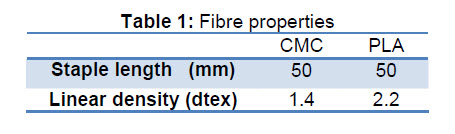
The carboxymethylcellulose (CMC) staple fibres were kindly supplied by ConvaTec, UK. Polylactic acid (PLA) fibres were kindly provided by Dorte Logemann, Bremen, Germany. The properties of the above fibres were tested and analysed (Table 1).
Prior to producing nonwoven structures, the fibres were conditioned for 48 hours in 65 ±2% relative humidity and 20±2°C temperature. The fibre linear density values were determined by using Vibromat M Tester (Textechno Company, Germany).
The single-fibre CMC, 75/25% CMC/PLA and 50/50% CMC/PLA composite fabrics were produced by using the Automatex Laboratory Nonwoven Line, Nuova Automatex, Italy at the University of Bolton and their absorbency, wicking, pH and antibacterial activity were tested and analysed. Two different collagen boosting (CB) agents were blended with ratio of 3% (w/v) CB-1 and 1% (w/v) CB-2. This 4% CB solution was prepared by dissolving powders with a magnetic stirrer in 1% (w/v) acetic acid solution until the solution turns to transparent. The 4% CB solution temperature was 50oC during the solution formation. The mixture was stirred for 30 minutes at this temperature. After complete dissolution, the solution had varying pH values from 4.0 to 5.0. The solution treatment of fabrics was done mainly by the spray coating technique at the room temperature. The test solution A, which was prepared by dissolving 2.298g sodium chloride and 0.368g calcium chloride dihydrate in 1 litre of distilled water, was used to simulate serum and wound fluid.
Table 1
Results and Discussion 
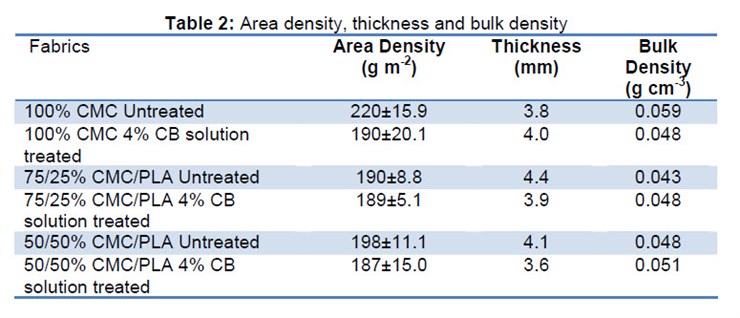
The area density, thickness and bulk density of the fabrics are given in Table 2.
According to Table 2, the area densities of untreated fabrics were found to be much higher than the coated fabrics. The thickness of fabrics ranged from 3.6 mm to 4.4 mm. The most obvious finding to emerge from the physical characterisation of the fabrics is that the fabric properties were affected by the spray coating process.

Table 2
Absorbency and wicking properties
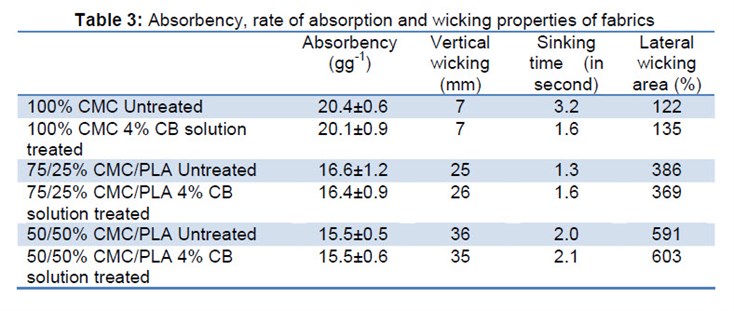
The absorbency, vertical and lateral wicking, and the rate of absorption results are shown in Table 3. It was observed that 50/50% CMC/PLA fabric had the lowest absorbency value with 75/25% CMC/PLA fabric showing a better absorbency value.
This study confirms that PLA containing fabric had somewhat decreased absorbency as compared to single-fibre CMC fabric. On the other hand, PLA fibres helped to increase the vertical and lateral wicking properties significantly, which is one of the most important objectives of this research work. It is also worth mentioning that the treatment did not affect other properties tested considerably. The wicking properties of the single-fibre CMC dressing have been enhanced by using PLA fibre reinforcement. This will help in stopping the pooling of the exudate in one specific area of the wound dressing. The enhanced wicking can reduce the risk of maceration.
Table 3
pH and antimicrobial properties of treated fabrics
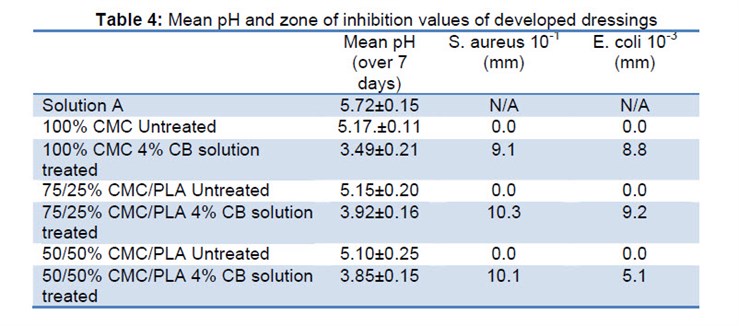
The mean values from day 1 to day 7 for each fabric in solution A are given in Table 4. In all cases, the pH values of solution A decreased with the immersion of fabrics in it. The pH value of treated fabric immersed in solution A gradually decreased over time. The most important result to emerge from the data is that 4% solution treated fabrics had considerably lower pH value as compared to their untreated counterparts. It can be concluded from these results that the 4% solution treatment can provide the desired acidic pH of ≤ 4.0 which helps to enhance the wound healing process. 
Table 4
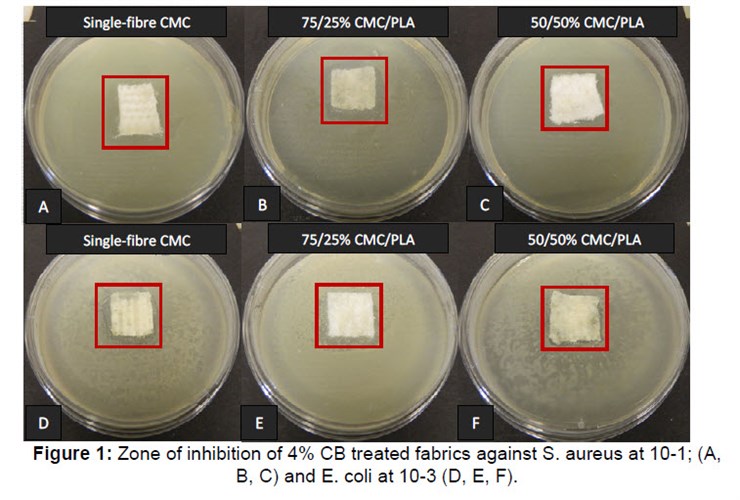
The Staphylococcus aureus bacteria at 10-1 dilution and the Escherichia coli bacteria at 10-3 dilution were studied to determine the antibacterial activity of 4% CB treated fabrics. The zone of inhibition values are tabulated in Table 4 and are depicted in Figure 1. The untreated fabrics did not show any zone of inhibition. It is clear from Figure 1 that all 4% CB treated fabrics demonstrate promising zone of inhibition. It can thus be concluded that the blend of collagen boosting agents at acidic pH can be effectively employed for achieving the antibacterial activity of the developed wound dressings which is one of the main objectives of this study. 
Figure 1
Conclusions 
The overall functional properties of the single-fibre CMC dressing have been enhanced by using PLA reinforcement. The enhanced wicking can reduce the risk of maceration and infection. It needs to be stressed that the PLA reinforcement has not influenced the higher absorbency properties of the CMC dressings considerably. The CMC/PLA dressing still has a higher absorbency than alginate dressing (15), which is one of the well-known high absorbent wound dressings. The developed PLA containing novel dressing possesses the desired fluid absorption and wicking properties which make the PLA fibres an ideal reinforcement to be incorporated into the CMC fibres. The incorporation of PLA fibres in composite structures for wound dressing application can also be considered as an ecologically friendly combination mainly because of easy biodegradability. In addition, PLA fibres provide biocompatibility, non-toxic, high absorption and wicking properties. After achieving the intended major structural properties, the developed novel CMC/PLA composite structures were treated with collagen boosting agents. 
One of the major objectives of this research paper was to incorporate suitable collagenboosting agents onto the novel composite dressings. Two different collagen boosting agents have been successfully applied on the developed fabrics. The results suggest that 4 % CB (w/v) solution can produce the desirable attributes in the wound dressings. The 4% (w/v) collagen boosting solution treated fabrics exhibit the desired properties related to the acidic pH and antibacterial performance. The two major objectives of the study have been successfully achieved by collagen booster agents, one collagen booster provides acidic pH and the other provides antibacterial property. The two collagen boosters, contained in 4% solution, treated dressings delivered desired acidic pH and antibacterial in addition to enhancing the growth of collagen during wound healing. In general, these findings have important implications for developing ‘all-in-one’ therapeutic nonwoven wound dressings.
Finally, the best combination for achieving the desired properties have been observed from the 4% (w/v) collagen boosting solution treated 75/25% CMC/PLA composite dressing. The findings of this study have a number of important implications for future practices in wound care; however, the in vitro observations need to be supported and confirmed by in vivo and clinical evaluations.
References 
1. Krasner, D.L., Rodeheaver, G.T. and Sibbald, R.G. Chronic Wound Care: A Clinical Source Book for Healthcare Professionals (4th edn). New Jersey : HMP Communications, 2007.
2. Macdonald, J.M. and Geyer, M.J. Wound and Lymphoedema Management. s.l.:World Health Organization, 2010. ISBN 978 92 4 1599139.
3. Gethin, G. The significance of surface pH in chronic wounds. Wounds UK. 2007, Vol. 3, 3, pp. 52-54.
4. Ovington, L.G., Pierce, B. and Wayne, K. Wound dressings: form, function, feasibility, and facts, Chronic wound care: A clinical Sourcebook for Healthcare Professionals. London : Health Management Publications Inc, 2001. pp. 311-319.
5. Sharp, C. Managing the Wound with Hydration Response Technology. Wound UK. 2010, Vol. 6, pp. 112-115.
6. Thomas, S. Exudate-Handling Mechanism of the Cutimed Cavity Range of Foam Dressings: Laboratory Report 2. London : BSN Medical: www.medetec.co.uk, 2009.
7. Seo, S.Y., et al. Alginate-based composite sponge containing silver nanoparticles synthesized in situ. Carbohydrate Polymers. 2012, Vol. 90, pp. 109-115. 
8. Tsukada, K., et al. The pH changes of pressure ulcers related to the healing process of wounds. Wounds. 1992, Vol. 4, 1, pp. 16-20.
9. Schneider, L.A., Korber, A. and Grabbe, S.Dissemond, J. Influence of pH on wound-healing: a new perspective for wound-therapy? Arch Dermatol Res. 2007, Vol. 298, 9, pp. 413-420.
10. Schreml, S., et al. Wound healing In the 21st century. J Acad Dermatol. 2010, Vol. 63, 5, pp. 866-880.
11. Leveen, H., et al. Chemical acidification of wounds. An adjuvant to healing and the unfavourable action of alkalinity and ammonia. Ann Surgery. 1973, Vol. 178, 6, pp. 745-750.
12. Leung, D., et al. Use of distilled white vinegar dressing supplement to oral antibiotics in the management of Pseudomonas aeruginosa exit site infection in continues ambulatory peritoneal dialysis patient. Hong Kong J Nephrology. 2001, Vol. 3, 1, pp. 38-40.
13. Milner, S.M. Acetic acid to treat Pseudomonas aeruginosa in superficial wounds and burns. Lancet. 1992, Vol. 4, 3, pp. 340-361.
14. Poulter, N., et al. Plasma deposited metal Schiff-base compounds as antimicrobials. New J Chemst. 2011, 7.
15. Uzun, M., Anand, S.C., Shah T., Study of the pH and Physical Performance Characteristics of Silver Treated Absorbent Wound Dressings” Journal of Industrial Textiles, 2012: DOI: 10.1177/1528083711435183.

Transforming Textile Printing

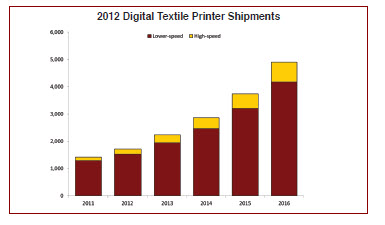
In our recent InfoTrends study called ‘Transforming Textile Printing’ our team took an in-depth look at opportunities for digital printing in the textile market. The potential for digital printing to influence the printed-textile market has long been promised, yet less than 1.5% of printed textiles are digitally printed today.
The textile market is a vast business, easily surpassing $1 trillion in annual revenue on a worldwide basis. Encapsulated in this number is the ‘printed’ textile volume, which is more than $165 billion, and yet nested within that is a digital-textile printing segment which InfoTrends believes is valued at more than $10 billion worldwide.
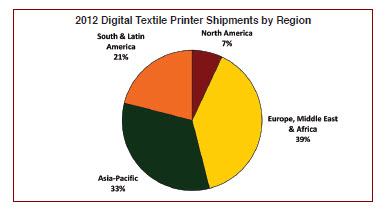
The global nature of this market is extremely important, because the textile business is critical to some of the world’s largest and fastest growing economies. In fact, adoption of digital-textile printing systems is a global phenomenon, as none of the major printed-textile regions can afford to be left behind in terms of their ability to meet the changing demands of the market. The market is led by the Europeans, where many of the top fashion centres and leading brands reside, but there are growing markets for digital-textile printing systems worldwide. What we learned as a result of this study is that changing dynamics in brand management, as well as retail go-to-market, present an enormous potential for high-speed digital textile printing systems over and beyond the forecast period. These changes include: increasing number of fashion seasons and the resulting demand for faster cycle times; a trend to shorter run lengths; and the desire to mitigate risks for unused/unsold textile-based products.
2102 Digital Textile
At the same time, on the technology side, there has been a generational leap forward with the recent introduction of high-speed systems that are more competitive with screen and gravure textile printing both in terms of production speeds and costs. The use of high-quality, high-speed inkjet print-head technology in these high-end systems enables production of hundreds, and even thousands of square metres per hour that are robust enough to run 24 hours a day, 7 days a week.
The combination of all of these factors will lead to a rapid adoption of digital-textile printing systems. InfoTrends is forecasting an overall compound annual growth rate of more than 28%, and more than 42% among the production-oriented high-end digital-textile printing systems.
2102 Shipments
This confluence of factors is driving change in the textile market and is expected to drive investment in digital-textile printing systems and usage through the present forecast period. The increasing ability of textile producers to respond to demand for faster cycle times is provided by digital printing.
While many traditional textile-printing companies are adopting digital printing, the developments cited in this InfoTrends research also have enabled the emergence of web-based companies, which specialise in short-run digital-textile production and provide these services to global businesses and consumers by employing digital-textile production workflows that are more efficient and faster than the traditional textile supply chain could offer.

ANALYSIS: Efficient workflow in digital textile printing


Digital workflows are not new and, in the wide-format inkjet industry in general, users work with different types of equipment, various profiles and RIP procedures, plus a wide range of media on the jobs they produce.
There is a learning curve for every print-service provider or display specialist when making the move to textile printing, but confusion arises because of the perceived workflow complexity and the way in which some machine manufacturers tend to over-simplify the methodology needed. With the right guidance, however, it is not that difficult to achieve a profitable and efficient workflow in digital textile printing.
Economics vs. Capacity
In visual communication, soft signage for retail and branding is increasing its influence thanks to improvements in both quality and speed. New print heads, ink formulations and fabrics have been the base for a growth in direct-to-textile printing. Here, too, nozzle count has increased and speed has gone up.
But, regardless of the specific market, speed in itself doesn’t count for much if the process is not offering the right economic model. In the end, it has to be commercially feasible to invest in a system that enables making a margin on the sales of the end product coming out of the factory.
The economic model of any printer relates to the cost of investment, running cost, going down to cost per square metre, and finally, to the profit per square metre. Speed isn’t in this equation; neither is relative quality. Speed may be achieved by either laying down less ink in fewer numbers of passes, resulting in lower quality, or by adding more print-heads, resulting in the need for more nozzles to jet the required ink volume on the fabric.
The greater the number of nozzles, the higher the initial purchase price of the printer. And, even though the higher speed may seem to be the biggest denominator for a purchase decision, it all comes down to the capacity and throughput expectations of the company making the investment. There is no financial benefit in having too much capability without a return on investment, regardless of print speed per hour.
It is not only the maximum amount of printed media in an hour that counts, although many print-shop owners and printer manufacturers alike focus on this single parameter; it is the total throughput as an end-product which must be assessed. This applies on a per-job basis as well as the average square metres generated from start to finish in any given time.
With variable applications and fast job change-over being paramount reasons for adopting digital inkjet printing, the time and cost savings are generated by consistency in machine performance and in the set-up and use of all equipment on the shop floor. This is particularly relevant when it concerns printing on to textile; most of the time, another process follows the printing, which is only one aspect of the entire workflow. As such, a focus just on print speed omits the more important balance between economics and capacity.
Ignored Potential
In some cases, lack of cohesion is forgivable and understandable because the print-shop owner literally grew into the situation of having different types of equipment over time or as a legacy. A quick assessment shows that some machines or operators are standing still and idly waiting for another process to finish before they can run the next step of the production flow. Additionally, because of incompatible systems, considerable amounts of time can be wasted on converting or changing media, rolls or processes.
Another common problem concerns the colour reproduction and matching across systems. An issue often mentioned is the inability to catch mistakes before they happen. Operators who have grown to accept a certain system or method might be stuck with what they are accustomed to, and never research new or better options that can lead to greater efficiency and improved workflow overall.
Logically, running different types of machinery will cause variations in output. Different inks produce a different colour gamut, and different media will have had different treatments. Different print processes feature different resolutions and inkdroplet shapes and sizes. Some inherent differences can’t be circumvented but, in pursuing optimisation, there is a key factor that can greatly improve end results.
In a single print shop, many manufacturers and suppliers will have delivered equipment with their own methodology and their own ideas on how to approach a production flow. If one supplier suggests optimising a specific machine in a certain way to get better results, this can result in adverse effects along the way with other processes.
An example of this is a material that is developed with a coating for dye-sub transfer used in a calender heat-press system; it may not be suited for vibrant output when printing disperse direct ink and fixating it with an infra-red system. While one production method can work well, in another it might result in lower quality or, worse, slow down overall production.
Manufacturers and suppliers can be criticised justly for not providing adequate advice to their potential customers, who react typically by deciding not to invest in a technology because it appears to be too complicated or too different from what they already have installed. Similarly, although there are print-service providers working with digital textile, they are often not educating their specifiers – end customers, designers, agencies and brand owners – about the additional potential of using fabrics. An optimised workflow and an investment in a seamless production process can enable hitherto unconsidered opportunities to increase margin and provide new end products.
Learning Curve
The key principles employed in digital-textile printing require a learning curve and investment, yet this is a practical step so that anyone can generate innovative fabric alternatives that supersede conventionally output counterparts. This type of production also results in higher quality, higher margins and higher uptime, particularly if workflow is optimised.
Workflow is surprisingly competent with digital-textile systems but there is a myth surrounding its efficacy and the way in which overall efficiency is quantified purely in terms of the speed of the actual printing device. Instead, other elements need to be taken into account when assessing a true throughput rate, including logistics, manageability and, of course, the number of operators on the print-shop floor.
For the majority of inkjet technologies in use today, each element is independent from the next, so that the printing machines and finishing stations are not related by manufacturer. And, even where one supplier provides a bundle or combination, it is often based on equipment coming from different sources. This means a slightly different machine width and media-handling technique, a varied approach to optimising speeds or developing interfaces and no relation between what happens at the beginning of the process and what can influence it at the end. It doesn’t mean that any single component is bad in itself, but the combination makes it less efficient.
It would be encouraging to know that equipment can effectively be put in one production flow without too many disturbances. For example, were the media-handling system to be the same across different machines, then it would be straightforward to load 2.3m media on a 3.2m-wide machine, as the handling is familiar, logical and fast. Likewise, being able to adjust ink volume precisely at the artwork-processing stage, to optimise the parameters that are essential for efficient printing, fixation, wash-off and media penetration, results in a more competent system. When all elements come from one dedicated manufacturer, with an eye for the details in the overall development, the combined compatibility should eradicate any problems when setting up a production workflow.
This type of set-up, where individual units come together to make a total system, means that operators can add to overall productivity by planning each job within set parameters. They know that their workflow is tailored to the solutions being used and the people who are using them, without unwanted or unexpected interference or disruption.
Good workflow also involves generating efficient practices across all production areas. Many of these might appear to be based on common sense, but this approach normally only becomes apparent when a system manufacturer is aware of all the processes involved in daily working, from start to finish.
In an ideal world, a truly efficient and reliable workflow needs to be based on compatible elements which, together, provide seamless production in a harmonious environment. There would be no nasty surprises likely to spring up from any part of the processing procedure, from file generation, colour management, printing and finishing.
Particularly in the area of textile printing, application-driven solutions offer tailor-made processes which are beneficial in specialised production environments such as working with fabrics for soft signs, flags, banners, garments, décor and industrial end products. System efficiency and ergonomics also play a vital part in the economics and logistics of running an effective production line. Similarly, true compatibility between software, printing, fixation, washing and finishing ensures that a 24/7 operation flows smoothly and economically.
As witnessed in the past few years, the markets for digitaltextile printing include sampling and proofing, outdoor and indoor advertising, retail and point-of-sale, plus in-store and commercial and residential decoration. Industrial applications include transport and clothing, and commercial and domestic applications offer tremendous potential for fabrics.
A manufacturer that typically focuses on converting an existing print engine, so that it can be used to print on to textile, doesn’t take all these application examples into account or put them into the right context of making sure that the fabric and the machine work together in precise harmony. Just as often a standard is set from limitations, and not from possibilities, which leaves the agency, the brand owner, the designer and the print-service provider with a misunderstanding about potential and capabilities.
This poses an interesting question, albeit based on rhetoric. Is print speed still the most important factor when concerning the overall production process? For instance, if an in-line fixation process limits print speeds, the maximum throughput rate might not count for much. If loading media or preparing and RIPping artwork for print is slowing down the printing process, how does that relate to the overall production speed? The obvious, and practical, answer is that workflow efficiency does not come from print speed alone.

TECHNICAL FEATURE: Eco-friendly dyeing of silk with Croton

Abstract
The great appeal of textiles lies in their colours and the way that colour is used to create patterned effects. Colour is applied by the process of dyeing, which in its simplest form involves the immersion of a fabric in a solution of a dyestuff in water.

The amount of dyestuff required is very small, but its production and application require considerable skill. Changes in the ways of producing dyes during the nineteenth century heralded modern science. The uses of natural dye on textile materials are now being popularised globally by the continuous efforts of nature lovers. The problems caused by synthetic dye in human lives and environments, since the introduction of synthetic dye more than a century ago, has come to an alarming level today. Hence there is an urgent need to for an alternative to the hazards of synthetic dyes.
To explore the use of natural dyes is one such immediate solution. However, the limitations with the natural dye are their poor fastness properties, limited shades, low brilliancy, etc. To some extent, adding selected mordants/chemicals in natural dyeing is accepted, provided the character of the natural dye is unaltered and the eco-system is not damaged.
The present study explored the development of a process for the extraction of natural dyes from abundantly occurring plants, flowers namely Croton (Croton species) leaves. The study showed that this source can produce different shades of brown and peach colour. A series of experiments was conducted to optimise the different variables for dyeing. Acidic medium was optimised for dye extraction. For Croton dye, 8% dye concentration, 60 minutes extraction time and 75 minutes dyeing time were optimised.
Test of colour fastness to light, washing, perspiration and crocking were also carried out. The results concluded that the light fastness, washing, fastness, perspiration and crocking fastness of the Croton dye were good and samples that were mordanted showed better fastness properties as compared to control. This dye source is abundantly available throughout the year and does not cause environmental depletion. Experiments proved that the Croton dye is the good source for dyeing silk in shades of brown and peach. Thus it can be concluded that this dye has a lot of commercial potential.
Introduction 
The use of natural dyes has attracted increasing worldwide attention as the carcinogenicity and environmental pollution problem of synthetic pigments are becomes a great concern.
Increased environmental awareness and health hazards associated with the use of synthetic dyes have led to the revival of natural dyes.
Natural dyes are eco-friendly and promote the green revolution. It is the need of the day to exploit the forest wealth that can be a source of colour for textiles.
Natural dyes are deep and soft in colour, and many of these have antibacterial, insecticidal and medicinal properties, due to their natural origin, from herbal plants. Most of the natural dyes are non-substantive dyes, as they require the aid of mordants to penetrate the yarn/fibres.
Croton (Croton species) leaves come from one of the most colourful evergreen shrubs that we grow indoors. Also known as Codiaeum, this plant has its origin in Malaysia and the larger islands in the West Pacific. It is grown for its decorative foliage. The leaves are alternate, linear to broadly ovate, simple or shallowly to deeply lobed, and often variegated. They reach all the possible colours that a leaf can be, from the brightest green and yellow to the deepest green and red. Foliage colours change as the plant matures. There are never two leaves that look the same on a plant, and this is why Croton is so attractive.
In the present era the revival of natural dyes has created opportunities for researcher to explore for alternative sources that can compete with synthetic dyes in brilliant colour fastness.
Keeping these points in mind, an attempt was made through this study to optimise various dyeing variables for dyeing of silk fabric with Croton dye and also to test the colour fastness of dyed samples.
Experimental Procedure
Selection of Fabric
Silk (garad) fabric was selected for the study, as this fabric gave brilliant shades with selected dyes.
Pretreatment of Silk
A mild detergent (genteel) solution containing 0.5 ml of genteel/100 ml of water was prepared and heated to 50°C. Silk fabric was dipped in to this solution and stirred gently for about 30 min, then it was rinsed under tap water and dried in shade and ironed when half wet.
Selection of Dye
Croton (Croton species) leaves were selected for the study. The leaves were dried in shade.
Selection of Mordants
Three metallic mordants, viz. potassium aluminium sulphate (alum), copper sulphate and ferrous sulphate, and three natural mordants, namely bahera, pomegranate rind and tea leaves, were taken for study.
For each mordant, four concentrations – ie.0.5, 0.10, 0.15 and 0.20gm for alum; 0.1, 0.2, 0.3 and 0.4gm for copper sulphate and ferrous sulphate; and 1, 2, 3 and 4gm for bahera, pomegranate rind and tea leaves – were used. Three methods of mordanting, viz. pre-, simultaneous and post-mordanting were used for the study.
Optimisation of Dyeing Variables
A series of following experiments were conducted to determine the dyeing variables such as extraction medium, optimum concentration of dye material, extraction time, and dyeing time, concentration of mordants and methods of mordanting.
Medium of Extraction for Dyeing
Dye from Croton was extracted in alkaline, acidic and aqueous medium. Acidic medium was prepared by adding 1ml of hydrochloric acid in 100ml of water and alkaline medium was prepared by adding 1gm of sodium carbonate in 100ml of water. The dye material was then entered in each solution and boiled at 60°C for 1 hour. For aqueous medium only dye material was added in 100ml of water. To each dye extract, a known amount of silk fabric introduced and dyeing was carried out for 60 minutes. The method that gave the best colour on the silk was selected for further study.
Concentration of Dye Material
Five different concentration of dye material were prepared separately by heating 2, 4, 6, 8 and10gm of dye material in 100ml of water at 80°C for 1 hour. The solution were filtered and cooled.
The optical density (OD) of the dye solution before and after dyeing was recorded and the percent absorption was calculated by using following formula:
Percent absorption = Optical density before dyeing - optical density after dyeing/Optical density before dyeing X100
The concentration that showed the highest percent absorption was selected as the optimum concentration for further study.
Time for Extraction of Dye
The selected concentration of dye material was taken in five beakers, each containing 100ml of acidic water and boiled for 30, 45, 60, 75 and 90min respectively. To each extracted solution, known weights of silk fabric were introduced and dyed for 60 minutes. The dyed fabrics were removed from the dye liquor, and dried in shade. Percent absorption was calculated for each sample and, on the basis of results, time for dye extraction was optimised.
Dyeing Time
Five dye solutions of Croton leaves were prepared by extracting dye using the optimum dye concentration and extraction time in 100ml of water. Dyeing of pre-soaked silk samples was carried out for 30, 45, 60, 75 and 90 minutes respectively.
Percent absorption by each sample at different dying times was calculated. Based on maximum percent absorption, the best dying time was optimised.
Preparation of Blank Sample
After optimising the dying variables, a known amount of silk fabric was dyed with the optimum concentration of dye, extraction time and dying time.
Colour Fastness Testing
Each dyed sample was tested for colour fastness against light, washing, rubbing and perspiration. Light fastness testing was carried out according to the ISI: 971-1156 Test method; the washing fastness test was carried out as per recommendations of ISI test no.3; fastness against rubbing was determined using AATCC test method; perspiration fastness testing was carried out according to ISI: 971-1156 test method.
Results and Discussion
Medium of Extraction of Croton Dye
Among three media of dye extraction, ie. acidic, alkaline and aqueous, acidic medium was selected as the best. Dye extracted with 1% hydrochloric acid was selected for dye extraction.
Dye Concentration
Silk fabric was dyed with five different concentrations of Croton dye, ie. 2, 4, 6, 8 and 10%. The maximum percent absorption was obtained with 8gm dye material/100ml of water/2gm of silk. Results are shown in Table 1.


Dye Extraction and Dyeing Time
The dye was extracted and dyed at 30, 45, 60, 75 and 90 min. Maximum percent absorption was obtained at 60 minutes for extraction and 75 minutes for dyeing. Therefore 60 and 75 minutes were selected as optimum for extraction and dyeing time respectively. Results are shown in Table 2.

Concentration of Mordants
Synthetic Mordants
It was found that out of the various concentration of mordants used with Croton dye, best shades of colour were obtained by using 0.05gm (pre-mordanting), 0.10gm (simultaneous mordanting) and 0.15gm (post-mordanting) of alum; 0.02gm (premordanting), 0.01gm (simultaneous mordanting) and 0.04gm (post-mordanting) of copper sulphate; and 0.02gm (pre- and postmordanting) and 0.01gm (simultaneous mordanting) of ferrous sulphate.
Natural Mordants
For Croton dye the concentration found best for different natural mordants were: bahera 01gm (pre-mordanting) and 03gm (simultaneous and post-mordanting); pomegranate rind 04gm (pre-mordanting), 01gm (simultaneous mordanting) and 04gm (post-mordanting); and tea leaves, 02gm (pre-mordanting and simultaneous mordanting) and 01gm (post-mordanting). (Table 3)

Colour Fastness
Colour fastness grades of silk samples dyed with Croton dye using different concentration of each mordants and three mordanting methods are given in Table 4.

 The results given in the table reveal that the light-fastness grade ranged between poor (2) and good (5).
Washing fastness tests revealed that silk samples dyed with Croton dye showed considerable to slight colour change (2-4) and slight to no staining (4-5). Colour fastness grades were maximum in the case of all mordants. Ferrous sulphate and tea leaves gave better washing fastness.
Perspiration fastness grades for all the mordants were showed slight to negligible colour change (4-5) in acidic medium, whereas considerable to slight change (2-4) in colour was found in alkaline medium. Metallic mordants showed better perspiration fastness than natural mordants.
In crocking fastness, it was found that wet crocking ranged from slight to no staining (4-5) for samples mordanted with metallic mordants. In the case of natural mordants it ranged from noticeable to no staining (3-5). There was no change in colour in both dry and wet crocking.
Conclusion
Croton dye is a good source of pinkish brown (peach) colour and it creates a number of fast shades, ranging from brown, grey, green and khaki, on silk by using different natural and metallic mordants.
Researchers and scientists have a good opportunity to make a pollution-free environment by using this source on textile material, as the processing of these dyes involved no toxic chemical.
A wide range of colours and satisfactory fastness to light, washing, perspiration and crocking were obtained on silk.
Finally, it can be concluded that the application of Croton-leaf dye for dying of silk can be considered as an effective eco-option for protection of our environment and can be commercialised.
References
1. Bello, K.A and Defeng, Z.1999 Dye and intermediate. The Indian Textile journal 10(10) : 42
2. Das, S. 1992. Application of natural dye on silk, Colourage, 32 (9) 152
3. Gulrajani M.L 1993 Mordant compendium of inter regional workshop on natural dyes. Lucknow NHDC Ltd; pp 96-103.
4. Patra, S.K.; Nayak, A. and Das, N.B.2000. Yellow dye from debarked jack fruit wood. Colourage, 17 (8): 17
5. Paliwal, J. 2001. Effects of mordants on henna dyed cotton and silk fabric. Textile Magazine, 42 (11): 79.
http://www.chemistryexplained.com/Di-Fa/Dyes.html
http://houseplants-care.blogspot.com/2006/05/ croton-plant-care.html